General Instructions:
- Copy the given assignment of practical in fair practical copy of biology.
- Make the use of black pen for heading and sub-headings and blue pen for writing other content.
- Work should be presentable.
- Make well labelled and proper diagram as provided in this assignment.
Spot No.9
Aim to study and identify plasmodium and comment on the disease caused by it.
Materials required: Permanent slide of Plasmodium, compound microscope.
Theory: Plasmodium is genus protozoa. It is also a human pathogen. This genus consists of following four species.
- Plasmodium falciparum
- Plasmidium vivax
- Plasmodium ovale
- Plasmodium mlariae
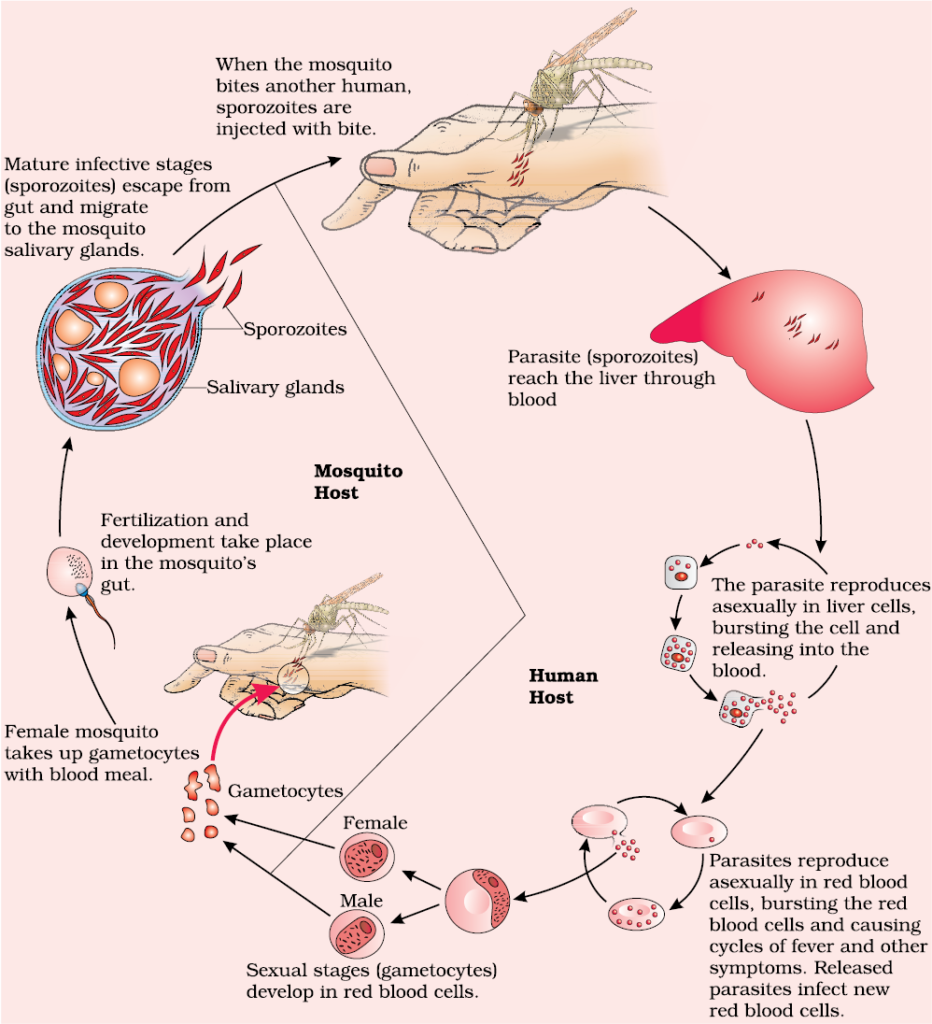
The main pathogen is Plasmodium malariae. The protozoan is spread to human by the bite of a female Anopheline mosquito. A form of the parasite known as the sporozoite enters the blood stream and makes its way to liver.
After multiplying in liver cells, the protozoan can penetrate RBCs, which is a hallmark of the disease malaria. Multiplication occurs in a RBC, which ultimately burst, releasing new forms of the protozoa that can infect neighbouring RBC. Such cycles lead to massive destruction of RBC.
Procedure.
- Clean microscope with the help of cleaning paper.
- Observe the permanent slide of Plasmodium under microscope under low power followed by high power.
Observations:
Classification:
Phylum: Protozoa
Class : Sporozoa
Order: Haemosporidia
Genus: Plasmodium
Comments:
- It is a digenic endoparasite of man.
- It completes its lifecycle in two different hosts
- Primary host: Man.
- Secondary Host: Female Anopheles.
- Its asexual cycle is completed in man while its sexual cycle is completed in female Anopheles mosquito.
- It causes malaria.
Mode of infection:
Bite of female Anopheles. Sporozoite is the infective stage of Plasmodium for human while gametocytes are the infective stage for female Anopheles mosquito.
Symptoms:
- Chills and high fever recurring after every 3 to 4 days.
- Pains in bone and joints.
- Headache.
Precautions:
Handle the museum Specimen carefully.